

MEDITATION for the Nativity of St. John the Baptist
(originally published on June 24, 2020 at Vis-a-Vis blog)
By Teresa R. Albright
Today the church celebrates the Solemnity of the Nativity of Saint John the Baptist, which tradition tells us took place in the ancient village of Ein Karem just outside Jerusalem a few months before Jesus was born. As the birthplace of John the Baptist, Ein Karem is also remembered as the place where a young woman named Mary once visited her kinswoman Elizabeth. A few months into staying with her family there, and with the Son of God already growing inside her own body, the Blessed Virgin would be present to help at the birth of John, a prophet and herald of the coming Messiah.
The gospel according to Luke tells us that John was the son of Zechariah and Elizabeth, an older couple from the priestly class. Because they had no children of their own, Zechariah and Elizabeth worried about who would inherit the important duties they held at the Temple in Jerusalem after they were gone. God answered their prayers, and John was conceived despite the advanced age of his parents. Eventually people would follow this son of a temple priest into the desert, where he preached purification from a structured corruption built up around temple worship during the reign of King Herod.
I visited Ein Karem four years ago while on pilgrimage to the Holy Land. My home away from home was the Ecce Homo Convent in Jerusalem where I studied Scripture with the Sisters of Our Lady of Sion. The convent, which opens onto the congested Via Dolorosa, was built in 1862 by Fr. Marie-Alphonse Ratisbonne. He would later build a second convent and orphanage at Ein Karem, which would become the perfect country escape for the religious sisters and their guests. Now a quaint, old neighborhood of modern-day Jerusalem, the setting is not unlike the Brookside-South Plaza neighborhood of our own Visitation parish. Ein Karem’s terraced gardens and idyllic hill-country continue to attract artists, laidback weekenders, and pilgrims alike. Because the town claims relatively minor pilgrimage sites, residents still outnumber tourists and it maintains its village atmosphere.
When there, it is not difficult for one to imagine the Ein Karem of two thousand years ago. I find it helpful when I can use my imagination to pray with Scripture. I enjoy allowing my imagination to “fill in the gaps” of well-known Bible stories. For example, as I meditated on the Nativity of John the Baptist, I wondered what John’s father and mother thought about his message of repentance and purification. Was Zechariah disappointed that John rejected his priestly lineage? Or perhaps he and Elizabeth were some of John’s first followers to be baptized in the Jordan River? Or perhaps they did not live long enough to witness their son’s prophecies and subsequent martyrdom?
The story of the Visitation also has some particularly interesting gaps to fill with one’s imagination. One scene I like to imagine is Elizabeth, Zechariah, and baby John making their own journey to visit Mary in Nazareth after Jesus was born. The three of them must have grown very close during those final months of John’s gestation. Were Elizabeth and Zechariah nervous about the risk of advanced maternal age? Did they find comfort in Mary’s peaceful presence? What fears and hopes were shared between the young Mary and her older, wiser relative? I imagine that John’s parents would be eager to see Mary again, offer their support, and pay homage to their newborn Lord.
Portal to Prayer
Read the first chapter of Luke. Use your imagination to fill in the gaps of the Visitation story and the Nativity of John the Baptist. Journal about what emerges in your prayer and reflection.
Interreligious Moment
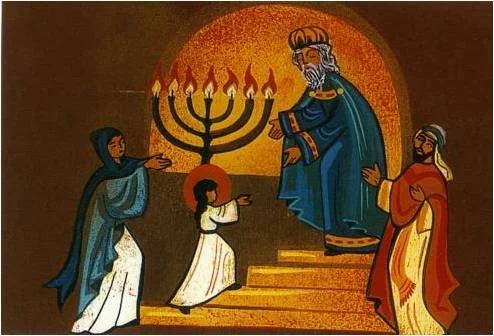
Did you know that Zechariah (Zakariya) is also considered a prophet in Islam? In fact, the Quran tells a detailed story about the prophet Zakariya (pbuh). As in the Christian New Testament, Zakariya is the husband of Elisabeth and the father of John. But long before he and his wife were advanced in age and longing for an heir, Zakariya served as the guardian of his young niece Mary.
According to Islamic tradition, Mary was dedicated to the service of the Temple after her father died while she was still a child. A temple priest, Zakariya committed to checking on the girl’s wellbeing daily. Each day when he’d arrive at the Temple, Mary would welcome him with platters of fruits and vegetables that were out of season. In winter, she offered summer produce; in summer, winter produce.
Spending much time with her when she was young, Zakariya and Elisabeth recognized that Mary was special. They saw the way God provided for her and understood these daily miracles as signs of God's power. Later, when John was born to them, they may well have remembered Mary’s out-of-season offerings.